
V for Vendetta, 2005 ★★★★☆

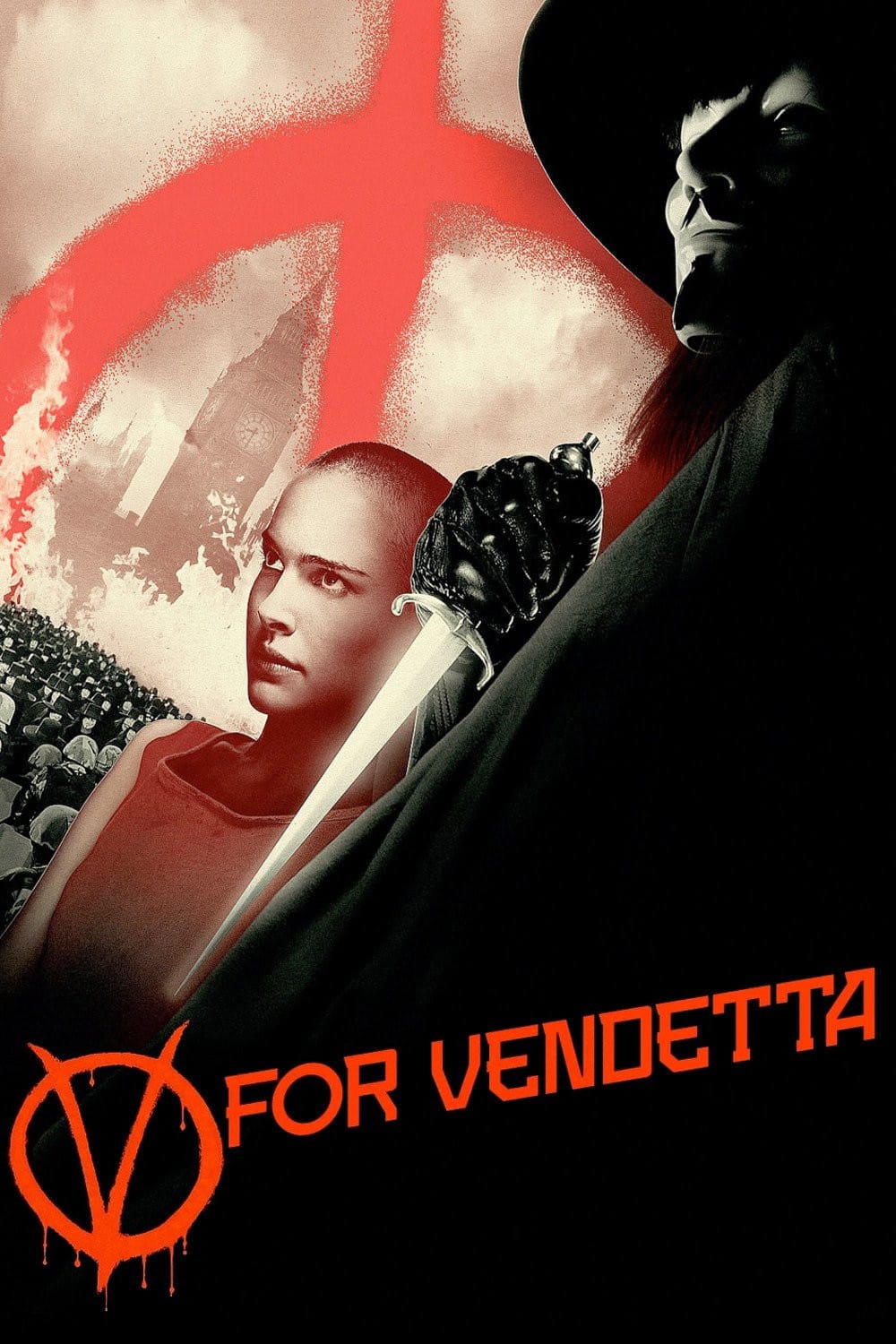
The Wachowski brothers next movie has been eagerly awaited even though the final two parts of the Matrix trilogy didn't quite live up to expectations of its fans and critics alike. The rumor-mill meanwhile was busy churning up dirt about Andy Wachowski's sexual leanings and his fantasies; regardless of their correlation to his movie-making skills.
V for Vendetta is predictably similar to the Matrix ideology in a way that it pitches an overarching regime against ordinary folk who seem to have acquiesced themselves to the oppression of their rulers who also control their fates. Based on the graphic novel by Alan Moore, the plotline is set in the late eighties in the United Kingdom approximately around the time when Thatcher ruled the roost.
As you might have read in countless previews and reviews after the movie released yesterday, England is now ruled by a tyrannical government based on a faith doctrine that squashes any form of expression especially political humor. Homosexuals, mentally ill, Muslims, are either exterminated or imprisoned. Art and history has no place in society nor does music. The government is headed by a despotic ruler who is fascinated by a red-black color scheme and love projecting himself on a large screen screaming orders at his subordinates who carry out his orders without questioning his authority. Overall, the government in its current form is a anarcho-capitalists' dream come true (socialists are requested to cite their ideal dream movie here).
Of course, not everything is that depressing. Natalie Portman, right from the opening frame provides eye candy although she progressively appears more to be a confused teenager and less of a woman in distress. The weird dress ensemble in the scene with the bishop only confirms this observation. After a while, you are ridden with guilt at having eyed with anything more than adoration. But you are helped by the fact that she had her locks shorn off halfway through the movie (apparently this was done live on-camera)
But in spite of all such miscasting accidents, she had held her own in the movie and handled several scenes admirably especially when she confronts the real intention of her imprisonment and proceeds to raise her arms in a rainy lightning-filled night (don't fret, she isn't dressed in white). The raising of arms to acknowledge her freedom of thought was a tad too dramatic and underscores the much-need subtlety that makes such moments timeless.
You may be surprised I haven't mentioned Hugo Weaving who spends almost all his screen-time behind a Guy Fawkes mask. He is V -- the protagonist of the movie and plays a confused character who was wronged in a terrible biological experiment that reminds you of the Nazi regime. Similar to the Edmund Dantes (The Count of Monte Cristo) character (someone that he identifies himself with), he is more obsessed with his goal of downing the regime than he is about examining the means to the end. Much ink has been spilled in keen introspection of this character in these changed times -- are we glorifying the deeds of a likely terrorist who wishes to blow up the parliament or are we supporting the just struggle of an emancipator?
Violence has rendered many a revolution successful but its overzealous application in recent times to justify political ends hasn't exactly endeared such means. Personally, I wouldn't characterize V (actually it is five written in Roman numerals) as a terrorist although his actions closely resembled that of one. The primary intention of terrorists is to spread terror while promoting a narrow self-interest whereas the revolutionaries using violent means targets the guilty oppressors and government mechanisms that seek to oppress the common folk; at no point are innocent people targeted at least intentionally by revolutionaries.
Bhagat Singh is one such example of a revolutionary although his means were considered wrong by his pacifist peers who chose an alternative method to fight the oppressors. V for Vendetta is inherently more a revenge tale, as also evident in its title, than it is about changing the world. The liberation of thought, is a natural by-product of V's ultimate aim. Characters in the past have also risen to 'change the world' only after they were personally wronged for e.g. William Wallace in Braveheart and Maximus in Gladiator.
Veering back to the movie, my interest was maintained throughout and it didn't seem like a terrible waste of money and time although I would have appreciated a bit of subtlety that encourages a thinking audience rather than simply present pyrotechnics. The supporting characters in the movie are also interesting placed and are a obvious reminder to their real-life counterparts.
The television anchor does a cool Bill O'Reilly in wiping up the sentiments of people who after a while tire of his acts, the late night show host is a Jay Leno who excels in poking fun at the political rulers only to be treated rather differently than Leno would be, and the nefarious bishop who hides behind the cloak of divine purity and indulges in debauchery reminds you of the pedophilic priests that have made news. But the coup de grace is delivered by the depiction of the entire governing machinery. Although it points to a comparison with Hitler, the veiled jabs at the Bush administration aren't too unclear (the only subtle message, I feel). It has a president who is uncannily clear of his methods regardless of its inappropriateness that bundles people into vans marked 'For Your Safety', a scheming and politically smart second-in-command gives you a sneak peak into Cheney's mind, and overzealous enforcers who are eager to please or the doubting ones who tag along in spite of having confirmed doubts of the administration's intentions.
Overall, I would recommend a dekkho although the critics haven't been too kind in their reviews. I would suggest you do not expect a Matrix-like thought process because V opts for a rather in-your-face treatment of the reality around you; whether or not the situation depicted turns out to be true or not is up to us.
As V threateningly says, the people shouldn't be afraid of their government but the government should be afraid of the people. Just don't take that literally and proceed to blow up your nearest local government office; there might be good people who are genuinely thinking of your best interest.
Member discussion