
The Poppy Fields ★★★★☆

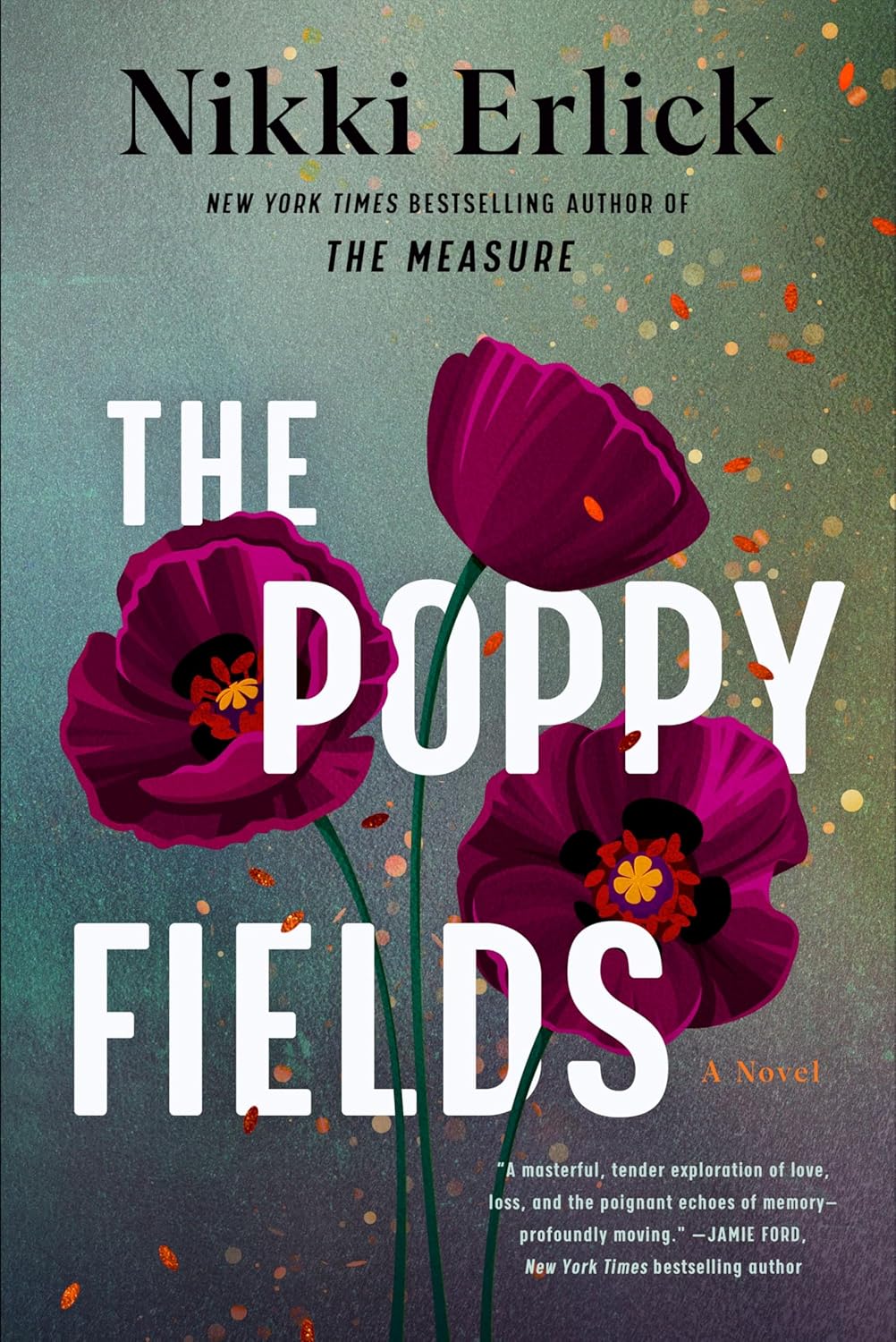
Erlick's second novel (for me) tackles grief more directly. Centered around three characters who are forced by circumstances to take a road trip to seek answers from the same destination. We learn more about the characters as they get closer and also through the other people they meet along the way. The first two-thirds were strong, so in comparison, I found the last third unsatisfying.
Edition Read
- Edition Type: Hardcover
- Number of Pages: 308 pages
- Date First Published: June 17, 2025
- Publisher: William Morrow
- ISBN10: 0063349337
- ASIN: 0063349337
- Language: English
Description
From the New York Times bestselling author of the smash-hit The MeasureRead with Jenna TODAY Show pick—comes a stunning speculative story of healing, self-discovery, forgiveness, and found friendship. Welcome to the Poppy Fields, where there’s hope for even the most battered hearts to heal.
Here, in a remote stretch of the California desert, lies an experimental and controversial treatment center that allows those suffering from the heartache of loss to sleep through their pain...and keep on sleeping. After patients awaken from this prolonged state of slumber, they will finally be healed. But only if they’re willing to accept the potential shadowy side effects.
On a journey to this mystical destination are four very different strangers and one little dog: Ava, a book illustrator; Ray, a fireman; Sasha, an occupational therapist; Sky, a free spirit; and a friendly pup named PJ. As they attempt to make their way from the Midwest all the way west to the Poppy Fields—where they hope to find Ellis, its brilliant, enigmatic founder—each of their past secrets and mysterious motivations threaten to derail their voyage.
A high-concept speculative novel about heartache, hope, and human resilience, The Poppy Fields explores the path of grief and healing, a journey at once profoundly universal and unique to every person, posing the questions: How do we heal in the wake of great loss? And how far are we willing to go in order to be healed?
Source: GoodReads
Notable Highlights
“Grief. The moment when you realize that your world and the world are entirely separate. When your world has come to a grinding halt, when you’re drowning and flailing about, and the world just rolls on without you.” [loc. 1252]
The world was bigger than the classmates who’d always struggled to place Sky in an acceptable category—she had the confidence of an athlete, the dramatic flair of a theater kid, the romanticism of a reader, and yet she wasn’t really any of those things, and was neither popular nor unpopular as a result. The world was bigger than all the adults who asked her what she “wanted to do with her life,” only to pinch their brows when she answered. [loc. 1906]
Ava never really understood the restless impulse that had fueled Emmy, so akin to the one now igniting Sky. The desire to leave the place you were from and see what else was out there. Ava could understand those who’d been pushed—driven out of their home by trauma or by lack of opportunities—but [loc. 2730]
Everything you learned and felt and experienced, all the people who shaped your life, all the people whose lives you shaped, the difference between the old world that once existed before you and the new world you now leave behind, the world that is irrevocably changed because you were a part of it. [loc. 4075]
So they can see that I’m only going to the cemetery because you always hear that grief is so common, that it happens to everyone at some point, but then it happens to you, and you just feel so alone . . . Do you think maybe that’s what some of your patients felt, when they applied? That the Poppy Fields is this special place where they can be surrounded by other people who share their pain. Maybe the only place in the world where they wouldn’t feel so alone. Isn’t that what everybody wants, in the end? Just to feel a little less lonely? [loc. 4113]
“Losing someone . . . it’s not like a sickness or a temporary rough patch you’re trying to deal with. Even if you sleep for two months and wake up and feel less awful, the work isn’t done. This doesn’t end. This is the rest of your life. There’s no getting over, there’s just . . . getting on. Figuring out who you are now, because you sure as hell aren’t the same person as before. But maybe that doesn’t have to be all bad.” [loc. 4484]
This was the other side of love. This was the aftermath, the cost, the opposite end of the bargain. This was the dirty, damp confetti and trampled flower petals, stamped into the muddy ground and tossed about by the wind, long after the parade had ended. This was the sad, lonely echo in the hall, now that the dance was over. Here, in this room, was grief. But grief was love in its second shape. [loc. 4937]
Member discussion