
Into Thin Air: A Personal Account of the Mt. Everest Disaster ★★★★☆
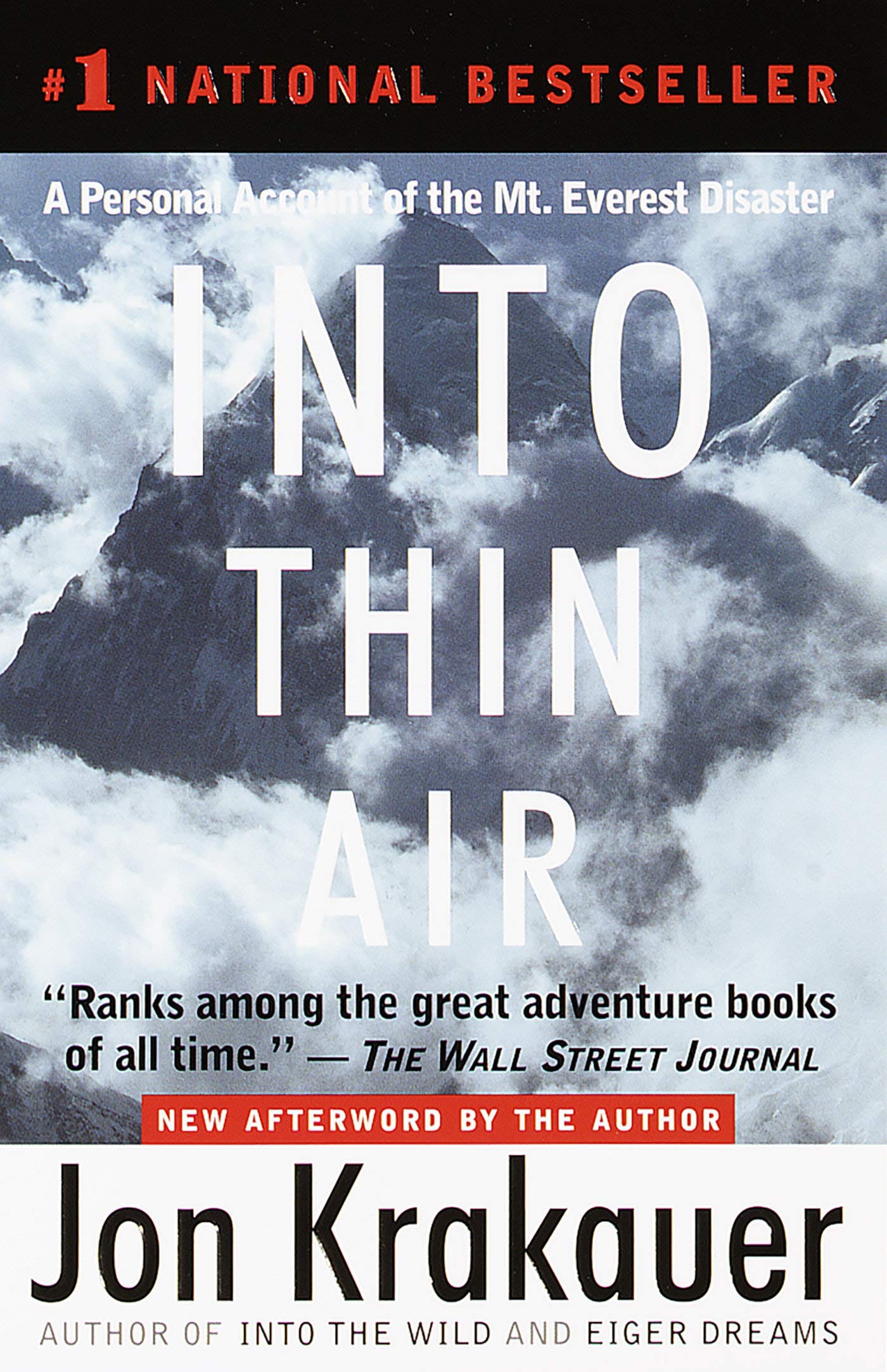
Strangely enough I have been whiling away my exam nerves by reading up on immaterial readings. The postponement of the exams does not help either but over time, I have learnt not to fight inevitability. The reading list had been on the backburner for long time and the exam always was a psychological barrier to get me started. Nevertheless, promising myself just a few pages each day (to prevent myself for getting too involved), I inadvertently managed to finish off two books. Into Thin Air by Jon Krakauer and Life of Pi by Yann Martel. The first one was a gift from Alpha during my visit to the now-mystic Chicago Meet and second was a gift to a MV as a part of "mutual gift-exchange program" (long winding name for a gift for no reason).
Into Thin Air is a typical climbers' book highlighting the disastrous 1996 season that claimed the lives of 12 mountaineers on their way to Everest. The massive commercialization, inebriated senses and plain-jane miscommunication made a dull mountaineering tale very interesting. The descriptive narration style of the author tried hard to be objective but the skepticism wrought on by blinding game that altitude can play with your senses has to be experienced to be believed. I have climbed only 18,385 ft above sea-level (slightly higher than Everest Base Camp) in my very-brief hiking and climbing life when I was at Khardungla Pass. Trudging through almost couple of feet of snow whiling trying to keep the chilling wind and flakes of snow off your dry skin, the only thought on your mind is to get back down to the safe confines of warm weather.
But we always long to go back to the heights in spite of the harsh climate and insurmountable obstacles that unpredictable mountains throw at you. I could almost sense the chill in the air as the protagonists fought hard against the elements of nature to stay alive. But the book did not entirely impress me and its claim to fame was primarily rooted in the infamous fight for veracity among different climbers at that time (maybe that was the interesting aspect of the tale).
Interestingly, climbing movies (unlike books) have never made it big and always need a sub-plot (Cliff Hanger) or exploding nitrous (Vertical Limit) to keep the interest going. Audiences can never be convinced that regular mountaineering can be as interesting without any bad guys in search of money or nuclear weapons. The excitement of the race to the summit or the mental and physical testing of ordinary mortals in extraordinary circumstances can be as dramatic as a legal thriller.
Some of the best tales I have read have always been about exploration or venturing into uncharted territory. Be it the Kon-Tiki expedition or the race to the South Pole immortalized by Amundsen and Scott rivalry, ordinary travel can be more interesting without the clichéd elements of a thriller.
Life of Pi was a book based on the other end of altitude spectrum i.e. at sea-level but I will keep that for a later day.
Member discussion