
Harishchandrachi Factory, 2009 ★★★★☆
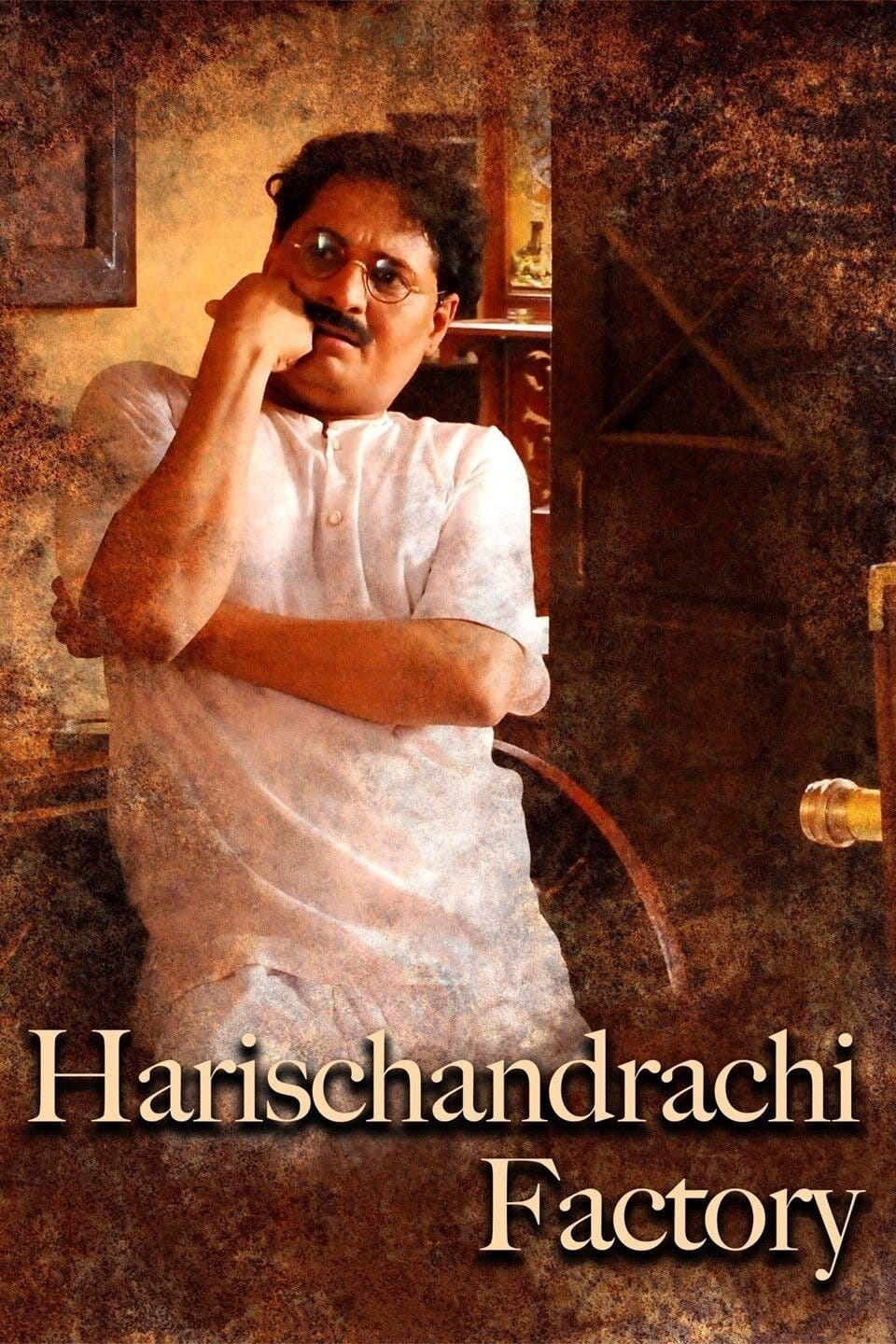
Ever since I read that India's foreign film entry for the Oscar was a small Marathi movie about India's first movie, I wanted to see it as soon as possible. The uber cool movie poster and the chatter around the movie made it sound even more interesting. But niche movies like these especially non-South Indian regional movies never make it to these shores.
The golden era of Marathi movies is unfortunately behind us and movies in recent times have been slapstick comedies (Banva Banvi, Fekka Fekki, etc.) or melodramatic tearjerkers (Maherchi Saadi); none of which can be considered good cinema. Dearth of talent is not an issue because many character actors in Bollywood movies or TV shows are Marathi. The Marathi theater scene is rich and vibrant, or at least was when I was in India ten years ago. In that context, Harishchandrachi Factory is a delightful surprise which warms the cockles of your heart; something that all Nicholas Spark movies try too hard to do. As Sampada notes, the movie documents the crazy quest of Dhundiraj Phalke in discovering and understanding the new medium of moving pictures on a screen. The sense of wonderment among people when they first see moving pictures is akin to when a child sees anything in this world for the first time. I say crazy quest because even Phalke's friends drug and drag him to Thane's mental hospital after his obsession with cinema. It would only take a madman to understand and delve into the untapped potential of this mode of communication.
Unlike Shwaas, the other Marathi Oscar-selected movie from India, the mood in Harishchandrachi Factory is always upbeat and optimistic even when Phalke has to resort to selling his worldly possessions and going near-blind. Phalke's infectious enthusians and belief in this medium never gets him down even when he faces overwhelming criticism from his friends who beseech him to tend to his household duties. The movie underscores the importance of the unflinching support of his family in his crazy quest with his wife even letting him go to London when she is pregnant with their third child. Or his 12-year-old son not thinking much of his father shooting an important outdoor scene while being knocked unconscious.
The movie also emphasizes the inescapable truth of the role of art patrons who believe in his dream and provide him with monetary support. Getting ten thousand rupees (nearly a million in today's value) to travel to London in those times was definitely a huge risk by any standards. I love how serendipitous acquaintances like the fellow Maharashtrian restaurant owner help Phalke inch a little closer to his dream. It helps us in understanding that no matter how dedicated or obsessed a man is, he still needs the occasional help from others.
As a man, Phalke was progressive for his times. He insisted that his wife also learn the technical aspects of filmmaking (mixing chemicals, processing prints, etc.). Counter to tradition, he contemplated asking women to play the female roles in his first movie and even searched high and low for willing actors. The scenes showing him searching for women in red light districts and the subsequent reactions to his actions by others is hilarious. Men practicing and playing female roles provides plenty of comic moments.
Nitin Desai's set design and general ambiance of the movie is subdued and well suited to the movie where characters are more important than their environments (think anti-SLB's-Devdas). While relying on simple minimalist set designs, he also gives us an insight into the times. The occasional tram that goes rambling by, the continued fascination yet sense of comfort that people have for trains, or even the casual mention of Bombay's bucolic past ("I've heard that Dadar is a jungle").
Surprisingly, the Englishmen in the movie aren't portrayed as tyrants but in fact, as respectful and appreciative of talent. Right from the projectionist in the Bombay tent to the members of the London Film Society, Phalke is encouraged and assisted by the Englishmen and owes acquiring his camera to their benevolences. I'm sure Phalke must have faced some racial pushback but the movie doesn't touch upon those thereby maintaining the upbeat feel. Earlier in the movie, even the English police officer who is watching his magic show laced with calls for independence from British merely smiles and even comes up to congratulate him for his magic show.
The movie not only highlight's Phalke's love for the movies but also emphasizes the entrepreneur in him. He believes that movies are not only an art form but also a sound business that should make money. To boost interest and dispel superstitions (e.g. when you take a photo, it sucks the life out of people), he uses innovative advertising to bring people to the theater. He attracts not only Indians but also the British. His movies make a splash in England leading to offers to stay on but he senses the opportunity to develop an industry in India.
As a filmmaker, he was way ahead of his time and his understanding of the medium astute. This is best seen in his experiment with a growing plant that no photo or live performance could ever demonstrate. Distinguishing this new medium from popular theater performances made his moviemaking last beyond the fad years and well after the charm wore off. The movie is as much about Phalke the man as it is about his quest to make India's first movie.
Although it is a Marathi movie, even non-Maharashtrians will enjoy it thanks to easy-to-understand subtitles and humor (subtitles are adequate). It avoids the slapstick humor of popular Marathi cinema and veers away from emotional melodrama. Moviemaking and love of cinema is central to the plot and all characters revolve around this singular quest to bring the now-world's largest movie industry to India. I just wish we had more filmmakers who shared Dhundiraj Phalke's passion for movies today.
Watch Harishchandrachi Factory to discover what love of movies really is all about.
Member discussion