
Freakonomics: A Rogue Economist Explores the Hidden Side of Everything ★★★★☆
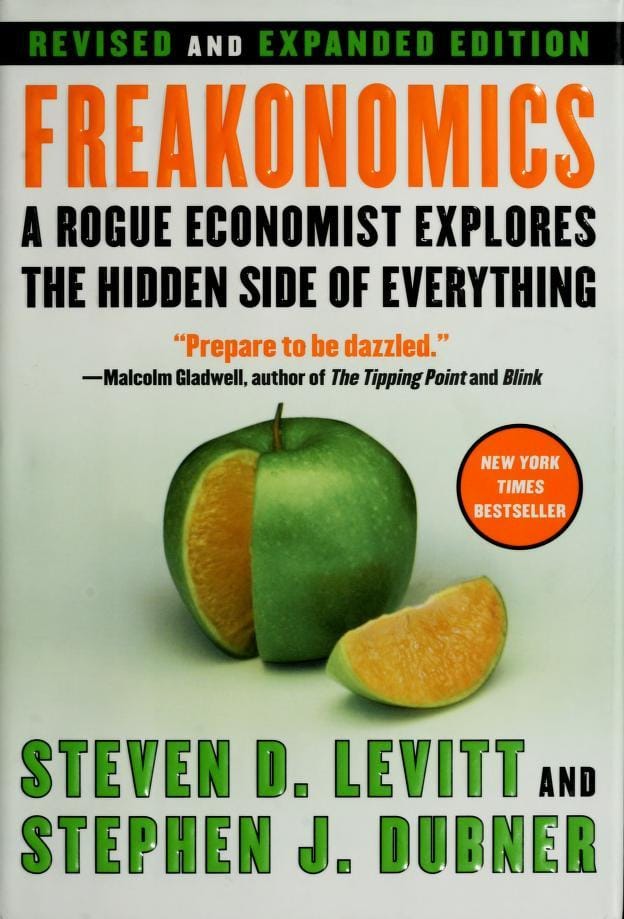
Should you think twice before citing an economics bestseller (previously an oxymoron) in class? If you think otherwise, a student was kicked out of class for citing Freakonomics. Of course, the name of the professor and the university has been withheld to prevent malicious attacks. It must be one of those uppity universities where professors "seem to know everything". But it conveys a lot about the attitude of a professor to heed to a student's opinion.
Although asking a student to leave the class is virtually unheard of in the U.S., I am basing this assumption on my graduate school classes. I am not aware of the undergraduate classes although even in India, sent out of an undergrad class for a differing opinion is relatively uncommon.
Heck, I cited the book couple of weeks back in my Housing and community class and the professor seemed intrigued. I have sent her the Amazon link and she has added it to her list of to-buy books. But now possessing Freakonomics is getting increasingly dangerous. It seems that a techie was asked to "leave the premises of his workplace" simply for possessing the book:
"One of the directors, in a very angry tone, proceeded to question me on why I would bring racially offensive material into their office. They cited that an employee turned to page 63 and read the words "those early lynchings worked" and were offended by them. I was asked to leave the premises immediately."
Some people can really be retards. Being politically correct taken to absurd levels, I say.
I finished reading Freakonomics sometime back and I loved it simply because it makes economics fun and interesting. Thankfully, I had a great professor in my first semester in grad school whose favorite quote regarding economics was, "the problem with teaching economics is not that it is boring but in fact, it is too much fun". I enjoyed his class, complete with subsequent pizza slices posing as diminishing marginal benefits. That class was more than five years back and I have taken advanced courses but the interest remains and has even attributed to the way I think (one of the chief reasons on "how much I have changed").
Coming back to Freakonomics, Levitt and Dubner present interesting facts about our daily lives and insights into human psyches that almost seem hardwired into our genes; cheating teachers and sumo-wrestlers, drug dealers who live with their moms, and deceptive real estate agents. I am not launching into a full-scale review of the book, especially when we have resident economists in the desi blogosphere who can do or must have done a better job. Even if you have a passing interest in economics or are intrigued by why we act the way we do, then don't hesitate and pick up a copy today.
PS. Nope, I haven't been paid off by Levitt or Dubner although they are sending out autographed labels for my book (in fact, for anyone who
asks).
Member discussion