
Animal Farm ★★★★★
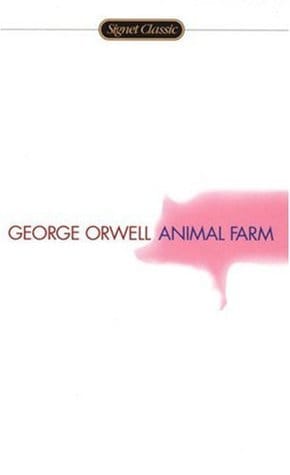
George Orwell had this uncanny knack for writing ominous conspiracy theory fiction that somehow come true. Animal Farm takes potshots at Stalin's Soviet Union, which became evidently clear as soon as the book was released in the mid-40s right after the Second World War. His second book, 1984 however although equally ominous did show traces of proven correct albeit few years late though except Big Brother are now fondly called as Bush Men (not the ones found in Kalahari). The fact that Animal Farm makes direct references to Marx, Lenin and Stalin is clear if you have read your Red literature. In a nutshell, Animal Farm narrates the story of a farm in England taken over by animals who then go on to establish a society of equality. But somewhere down the line, as the adage power corrupts suggests, things slowly deteriorate and the animals at least most of them are not as better off as envisioned earlier.
Beasts of England - the socialist anthem singing the praises of animal freedom and promise of a better life without being encumbered by humans depicts an unattainable utopia that we usually dream about. By cleverly disguising pigs as manipulative zealots, Orwell almost makes you cringe at the naiveté of the common man, played by other animals. The importance of propaganda is underscored by deft manipulation by Squealer the pig who always manages to twist the beliefs and conveniently makes ad hoc modifications to the Seven Commandments ensconced on the barn wall after the Rebellion. If you have studied your history carefully, you will understand that the propaganda ministry in any totalitarian regime is of utmost importance in squashing any possible mutiny bloodlessly.
The Seven Commandments in Animal Farm ultimately boils down to the classic "All animals are equal but some animals are more equal than others." Orwell subtly suggests that inherently all societies will experience a power struggle, some more obvious than others and ultimately arrive at an equilibrium that pits one class of people against the other, more likely unfairly. The earlier we accept this fact, the better our life is and helps keep our expectations at a realistic level. We, always strive to be in the dominating class which effectively makes our life better sometimes at the expense of others. But better them than you, right? It may seem harsh but life's realities are harsher. Things may not be as black and white as Orwell suggests since our society is much more complex than a life on a farm but ultimately it does depend how high up you are on the food chain. You can do your part by not doing any harm but don't expect that you will not be manipulated or betrayed because you did not.
The tale is devoid of any emotional sentiments except during the treatment of poor Boxer the hardworking horse. If capitalism suffers from the harsh realities of selfish interests, communism or socialism is no different in its lack for emotional attachment in favor of a greater good. If you haven't read this classic yet, go out and read it today. It's a quick read at 140 odd pages. It will definitely give you a better understanding of our society.
I might be a bit late in posting this review-esque post on Animal Farm but unfortunately I wasn't born when it came out.
Member discussion