
All Better Now ★★★★☆

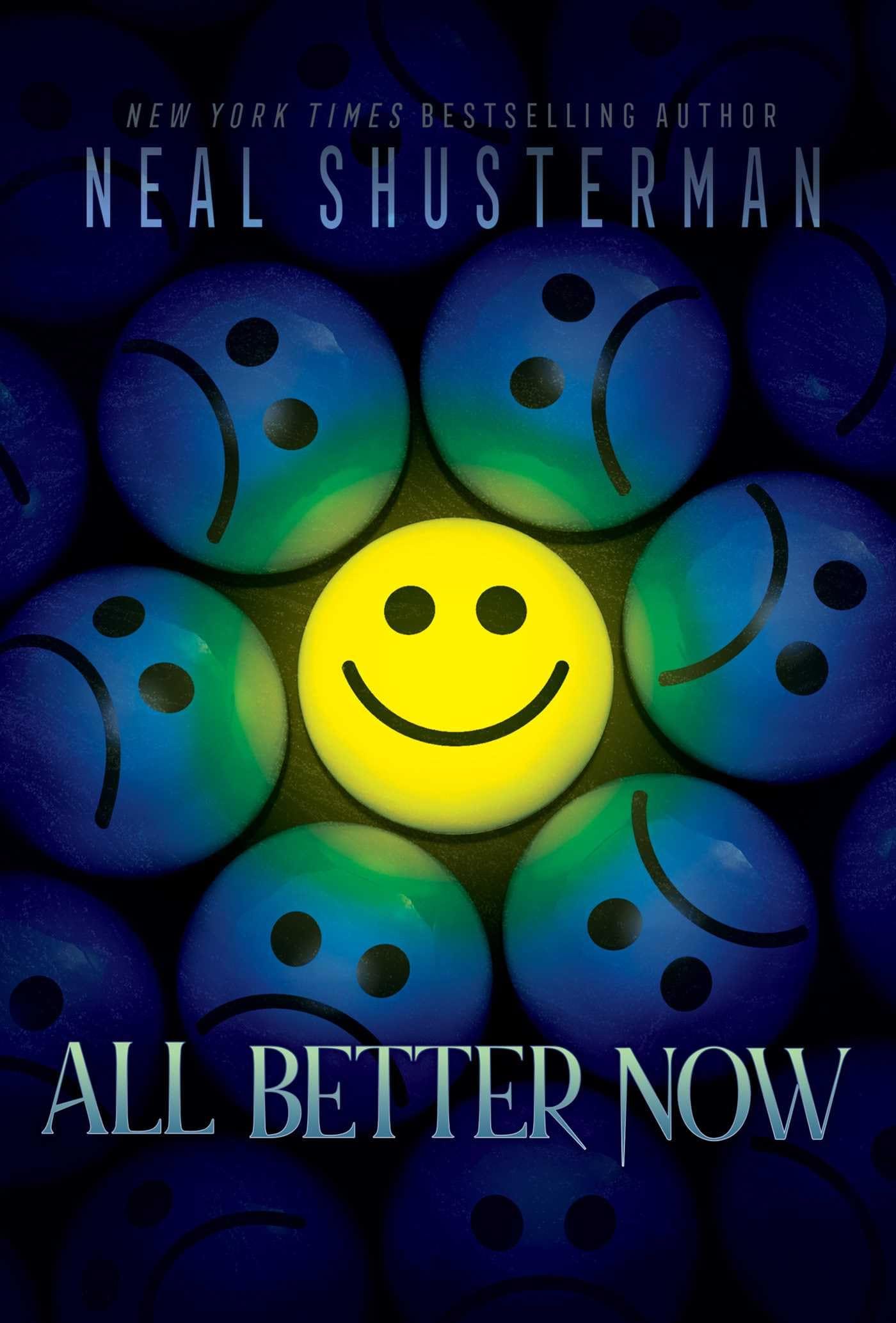
Very much Pluribus-like but more action-packed. But it explicitly explores the duality of the "good" disease; something that Pluribus does more subtly.
It seems it’s the first of two books in the series since this one ends inconclusively and sets it up for the second one.
- Format: 525 pages, Kindle Edition
- Published: February 4, 2025 by Simon & Schuster Books for Young Readers
- ISBN: 9781534432772 (ISBN10: 1534432779)
- ASIN: B0CV1V58FM
- Language: English
An unprecedented condition is on the rise. It behaves like a virus, with the first symptom being a fever, but those who contract it experience long-term effects no one has ever seen utter contentment. Soon after infection, people find the stress, depression, greed, and other negative feelings that used to weigh them down are gone.
Almost everyone revels in this mass unburdening. But people in power—who depend on malcontents tuning into their broadcasts, prey on the insecure to sell their products, and convince people they need more, new, faster, better everything—know this new state of being is bad for business. Soon, campaigns start up convincing people that being happy all the time is dangerous. There’s even a vaccine developed to rid people of their inner peace and get them back to normal because, surely, without anger or jealousy as motivators, productivity will grind to a halt and the world will be thrown into chaos.
It’s nearly impossible to determine the truth when everyone with a platform is pushing their own agendas, and two teens from very different backgrounds who’ve had their lives upended in different ways by the virus find themselves enmeshed in the center of a dangerous power play. Can they reveal the truth?
Notable Highlights
She told herself that hanging on to hope was nothing like her mother’s perpetual state of denial, but deep down, she knew hope and denial were reluctant neighbors. They glared at each other from across the same silty river of circumstance. [loc. 39]
His father was still relatively young, and besides, he had a good portion of Silicon Valley working on ways to live forever. “The way I see it, there’s big money in longevity. Because human greed for money is only surpassed by human greed for time. [loc. 166]
It’s easy to imagine yourself happy without money, TeTe, but the reality is very different. It’s true that money can’t make you happy—but lack of it can’t make you happy either.” [loc. 244]
“Sometimes I want it more than anything. Sometimes I’m afraid. Not just of dying… but of what I might lose if I recover.” “Worry? Pain? Trauma?” “Darkness is there for a reason.” Rón nodded, considering that. “Maybe the reason is to remind us why we need light.” [loc. 1534]
“We recoverees—we’re like the concrete piers,” Zee said. “The things that cling to us don’t hurt us anymore. But everyone else—they’re still wood. Need to be cared for. Need to be treated with tenderness and compassion. Even if they’re cruel to us.” [loc. 1917]
The way Rón saw it, civilization was a balance between self-interest and altruism; self-preservation and self-sacrifice. But in recent years, the balance had shifted toward selfishness. Maybe Crown Royale was nature’s way of trying to shift it back. [loc. 1928]
“Just because you won’t always be happy, doesn’t mean you’ll never be happy.” [loc. 1961]
Whites, Blacks, Latinos, even Asians—all sitting together, making friendly conversation like they make you do in elementary school. It boiled vitriol up inside him to see it—because The Mast doesn’t just hate; he’s made a lifestyle out of hatred. He wears it like a wrestler’s robe. If that gets taken away, what does he have? [loc. 2067]
“Maybe the world needs a little dose of selfishness,” she said. “Maybe that’s all that gravity is; the world selfishly holding on to what it has, so that everything doesn’t disappear into space.” [loc. 3213]
This is what the human race could be—is meant to be. And yet it resists. How strange that what people most fear… is the conquest of fear. As if terror were a living, breathing thing; a deformed beast wallowing in fetid darkness, determined to protect its own existence. [loc. 3836]
Member discussion